

For a day out from Rome’s Tiburtina area, Ostia Antica is an archaeological park where you can explore the remains of an ancient city built at the mouth of the Tiber. Its Forum, baths and multi-storey residential buildings give a sense of how the city worked.
- Location: Viale dei Romagnoli 717, Rome.
- Typical opening pattern: Tuesday to Sunday and public holidays, opening at 8:30 AM; closed on Mondays and on December 25 and January 1.
- Ticket basics: The combined full-price ticket is €18; a reduced ticket is €2 for eligible EU citizens aged 18 to 25.
- On site: Expect uneven paths, obstacles and areas that are not fully accessible.
Why choose Ostia Antica for a day trip?
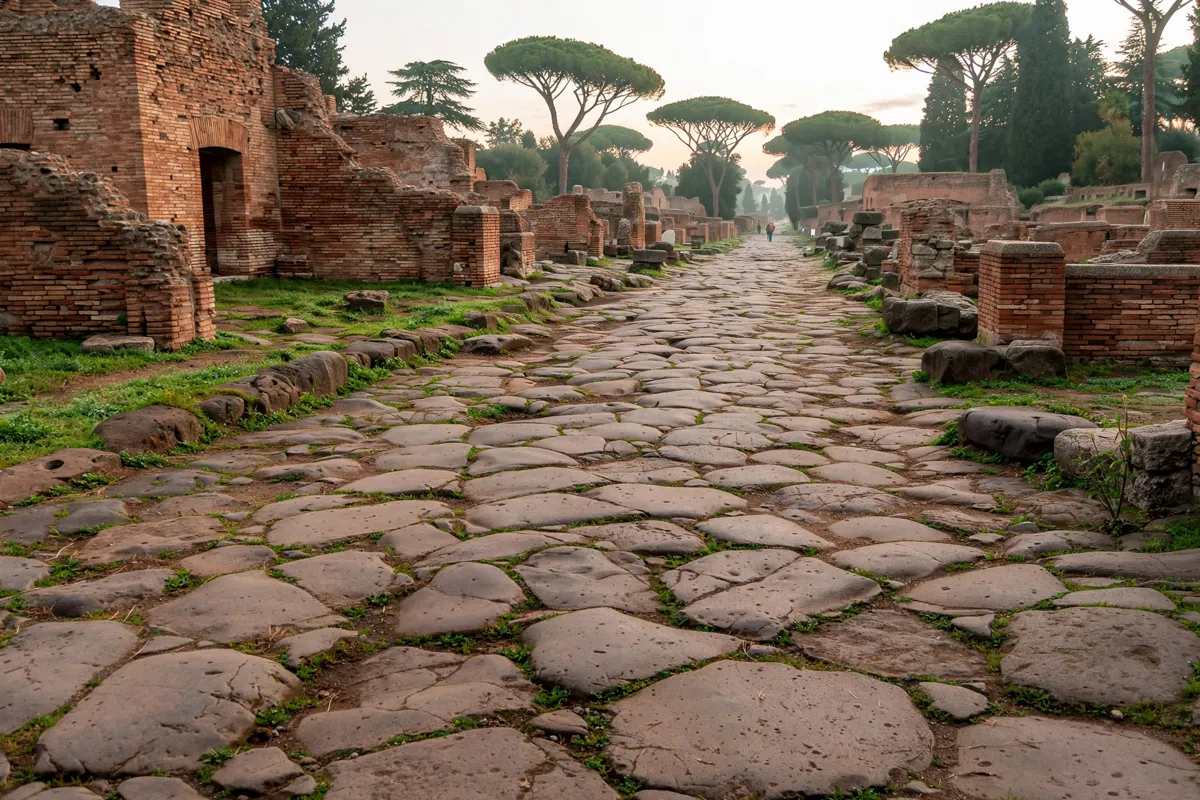
Ostia Antica gives you a way to explore Roman urban life through the surviving layout and buildings of an ancient city. Its ruins include public spaces and practical infrastructure, not just grand monuments.
The Park identifies the Forum, baths, public warehouses, guild seats, multi-storey residential buildings and the Capitolium among the city’s historic features. Together, they offer several angles on how the settlement was used: public life, trade, housing and worship.
The site’s story begins with a note of uncertainty. The Park says Ostia was built at the mouth of the Tiber and presents the city’s foundation by Rome’s King Ancus Marcius in 620 BC as a legend, rather than a confirmed account.
Plan the visit as time outdoors among archaeological remains. The Park warns that paths can be uneven and may include obstacles and tripping hazards; some areas are not fully accessible, and visiting can require considerable physical effort. Comfortable clothing and shoes are recommended.
How do you get from Rome to Ostia Antica?
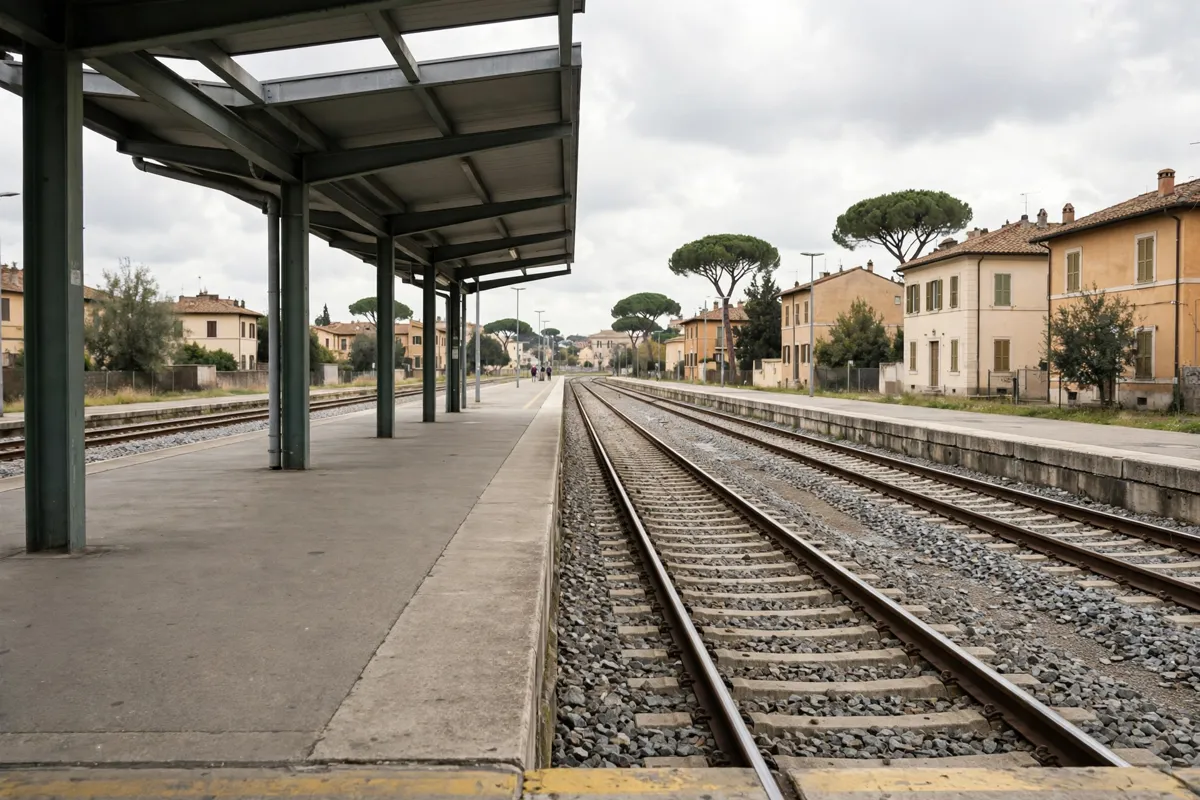
From Tiburtina Hotel Holiday, walk about 8 minutes to Roma Tiburtina station, then use public transport to reach the Ostia Antica stop, which the Park identifies as a connection to the archaeological area.
From the stop, keep the site’s address in mind: Viale dei Romagnoli 717, Rome. You can pair the ruins with the Ostiense Museum; the route from the ticket office to the museum is wheelchair accessible, and the museum has an access ramp.
If you are navigating through the main station, the guide to using Roma Tiburtina station covers that part of a Rome stay.
For the journey itself, check current transport arrangements before you leave.
Once at the archaeological area, allow time for walking between remains rather than treating the site as a quick stop. The Park describes routes designed for visitors with mobility difficulties or wheelchair users as concentrated primarily in the excavation area.
Tiburtina Holiday is a guest house in Rome, with guest house rooms available to book; its location is in the Tiburtina area.
Visitors with reduced mobility may enter with their own vehicle if it displays the appropriate permit, and can use the site’s internal parking area. Check the Park’s official visitor information for practical details before your visit.
How should you structure a day at Ostia Antica?
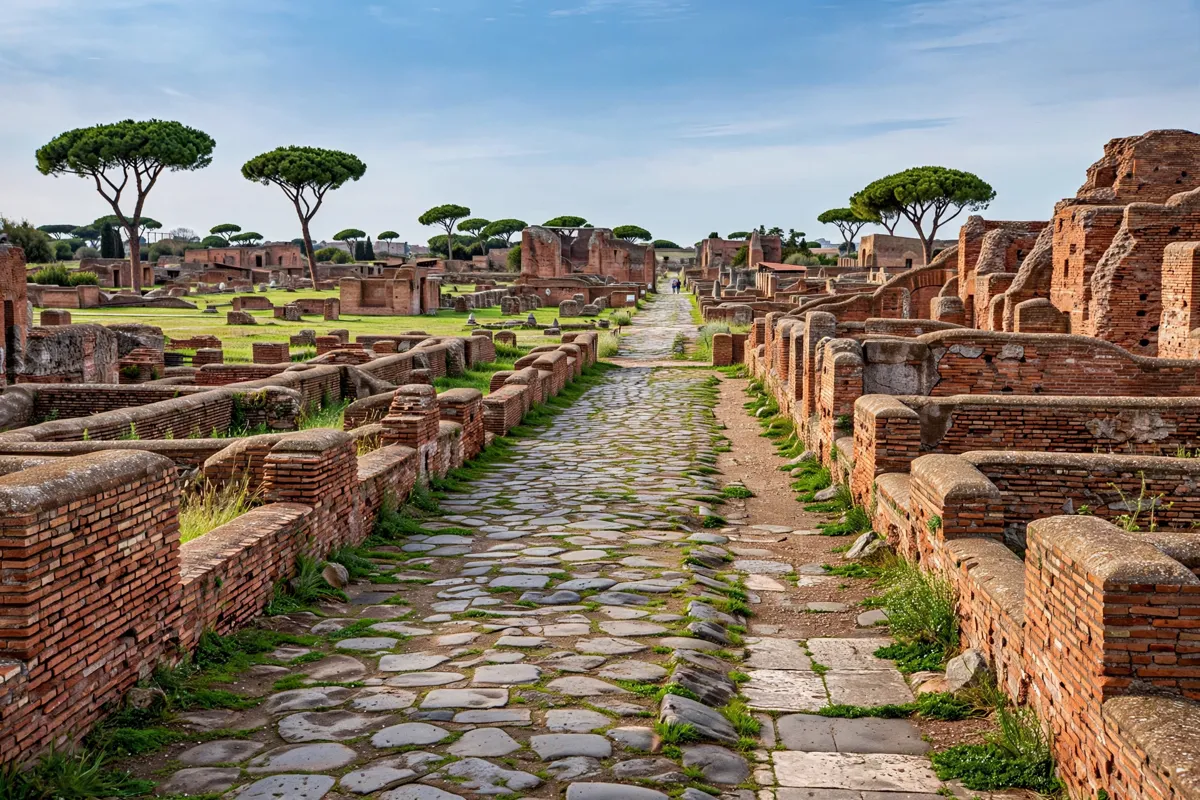
Start by checking the opening and closing time that applies to your visit, then plan to enter well before the last-entry cutoff. Inside, give yourself time to follow the archaeological area’s paths and take in its different kinds of remains.
A natural sequence is to orient yourself around the Forum, then continue through the public and commercial traces identified by the Park, including the warehouses and guild seats.
Leave time for the baths, residential buildings and the Capitolium as you make your way around. This order is a practical way to group the site’s main features; follow current on-site guidance for access and routes.
Keep the terrain in mind as you plan. The Park says paths may have uneven levels and tripping hazards, and that visiting can take considerable physical effort. Wear comfortable shoes and clothing, and don’t assume every area is accessible.
Meals and picnics are prohibited inside the archaeological area. The Park identifies the Caffetteria degli Scavi and dispensers for snacks and hot and cold drinks as options on site. Left-luggage service is unavailable, so plan what to carry with you before arriving.
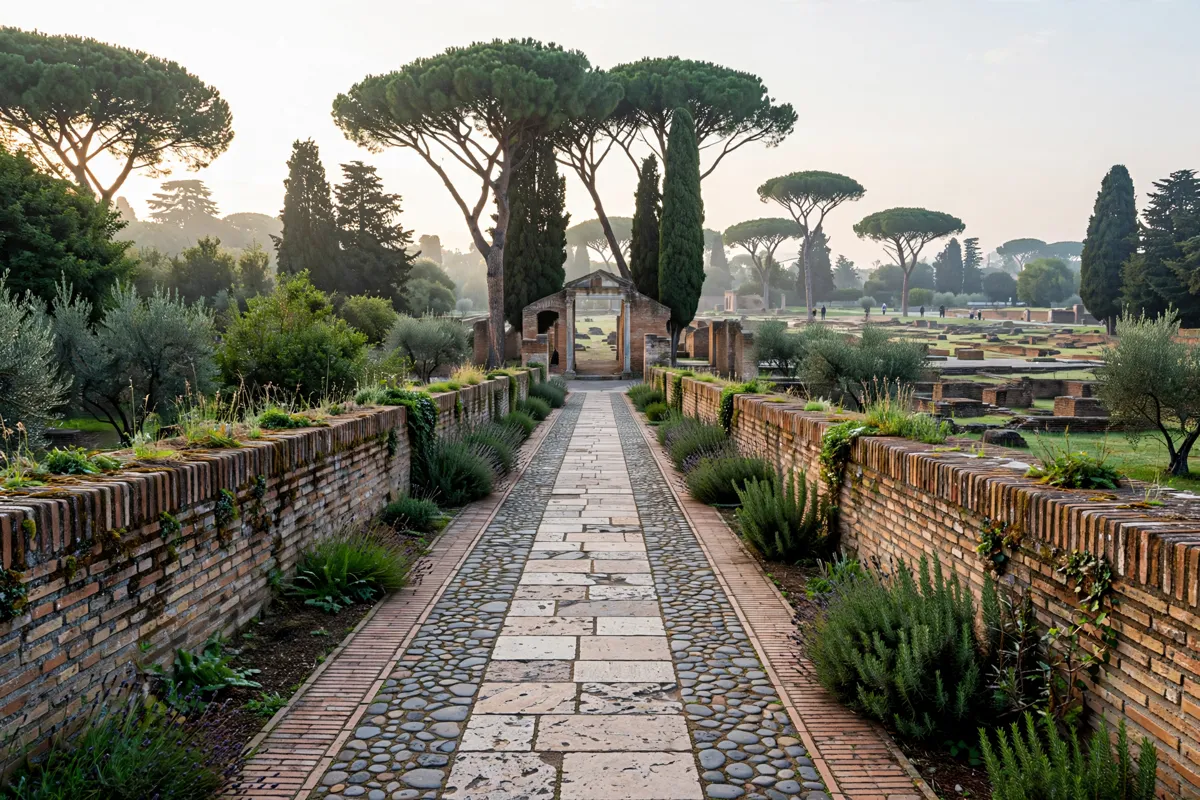
Tickets and opening information
The combined ticket covers the Park’s archaeological and museum sites and is valid for eight consecutive calendar days. The full-price ticket costs €18; the reduced ticket costs €2 for EU citizens aged 18 to 25.
You can buy tickets at the ticket office using cash or electronic payment, or through the Musei Italiani app. Temporary exhibitions may increase the ticket price. Admission is free at all Park sites on the first Sunday of each month, subject to each site’s opening hours.
The archaeological area opens at 8:30 AM on its open days. Its closing time changes through the year:
- From October 25 to February 28 or 29: 4:30 PM.
- From March 1 to March 31: 5:15 PM.
- From April 1 to September 30: 7:00 PM.
- From October 1 to October 24: 6:30 PM.
Last entry is one hour before the archaeological area closes, and the ticket office closes one hour before the stated closing time. The site is closed on Mondays, December 25 and January 1. Opening information and prices can change, so check the official site before you go.
Returning to Rome
Before leaving the archaeological area, account for the time needed to walk back out and reach your transport. The Park identifies the Ostia Antica stop as the connection for the return journey; check current service details so you can plan the trip back to Rome.
If you are continuing around Rome by public transport after returning, the Rome metro guide for the Tiburtina area can help with that part of your plans.
Dogs are allowed inside the archaeological area but must remain on a leash throughout the visit. Drone use, including at very low altitude, is prohibited because the site lies within the no-drone zone near Fiumicino Airport.
FAQs
What can you see at Ostia Antica?
The Park identifies the Forum, baths, public warehouses, guild seats, multi-storey residential buildings and the Capitolium among the site’s historic features.
When is the archaeological area open?
It opens at 8:30 AM Tuesday to Sunday and on public holidays. Closing times vary by date range, and last entry is one hour before closing.
Can you visit Ostia Antica in a wheelchair?
Some routes are designed for visitors with mobility difficulties or wheelchair users, primarily in the excavation area. The route from the ticket office to the Ostiense Museum is wheelchair accessible, and the museum has an access ramp.
Can you bring food or luggage into the site?
Meals and picnics are prohibited inside the archaeological area, and left-luggage service is unavailable. The Park identifies an on-site café and snack and drink dispensers.