

Porta Pia is a historic gate in Rome’s Aurelian Walls, in the Nomentano district. Its layered architecture and connection to the capture of Rome make it a worthwhile stop for understanding the city’s history.
- Location: Via Messina, 25, in Nomentano
- About 2.7 km from a guest house in Rome’s Tiburtina area
- Designed by Michelangelo, with its present appearance shaped by later restoration
- The gate buildings house the Historical Museum of the Bersaglieri; check current visitor access before planning a museum visit
Where is Porta Pia in Rome?
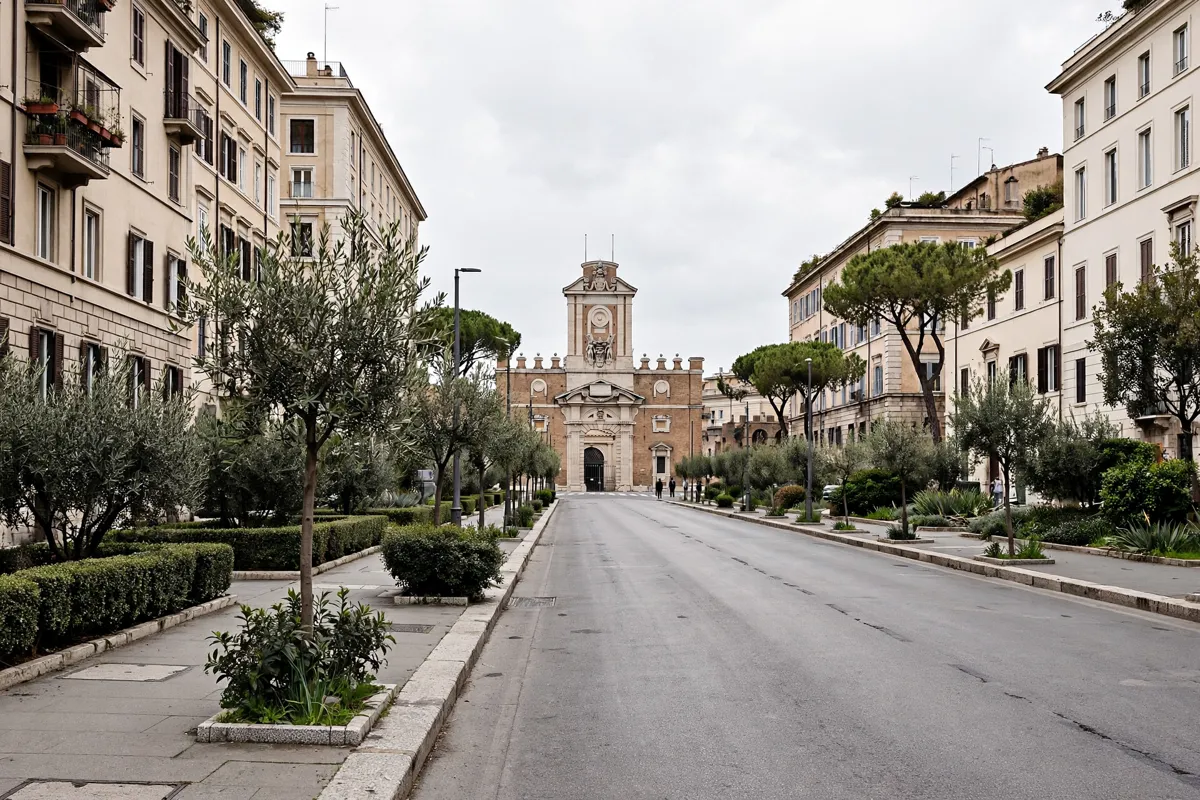
Porta Pia stands in Nomentano, at Via Messina, 25, where it forms part of Rome’s Aurelian Walls. Rome’s official tourism site gives its location at 41.911127° N, 12.502595° E.
The gate replaced nearby Porta Nomentana, which was later walled up. Its position in the walls makes the surrounding streets part of the story: this was a defended entrance to the city, not simply a freestanding monument.
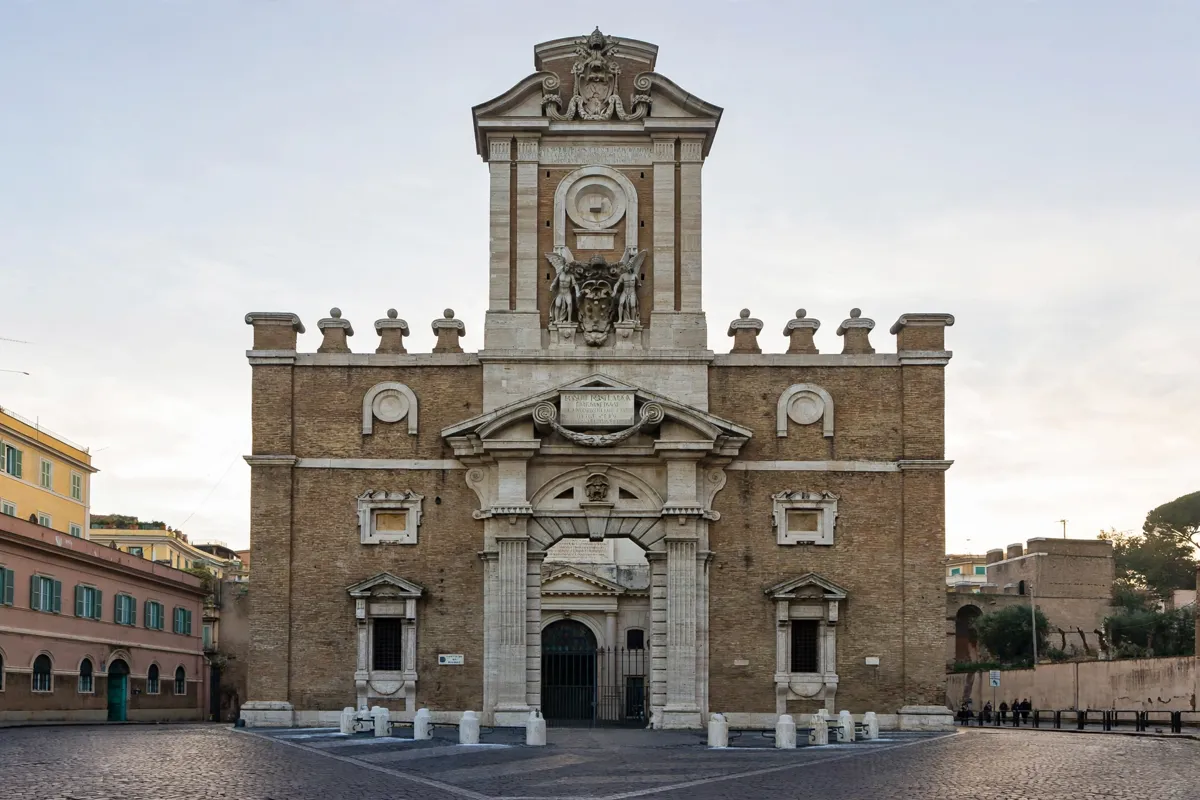
The history behind the gate
Porta Pia was commissioned by Pope Pius IV, whose name it bears, and Michelangelo designed its inner elevation. Work began in 1560 and stopped in 1565, leaving the pediment incomplete.
After lightning struck the gate in 1851, Pope Pius IX commissioned restoration. Architect Virginio Vespignani reconstructed Michelangelo’s façade and designed the exterior elevation between 1862 and 1868 as a single-arch triumphal structure with side niches. Those niches held sculptures of Saint Agnes and Saint Alexander, made by Enrico Amadori in 1865.
On September 20, 1870, troops entered Rome through a breach in the walls a few dozen metres from Porta Pia during the capture of the city. The military operations damaged the gate’s exterior decoration, adjoining walls and the inner part of Michelangelo’s façade. A monument marking the breach stands about 50 metres west of the gate.
What should you notice at Porta Pia?
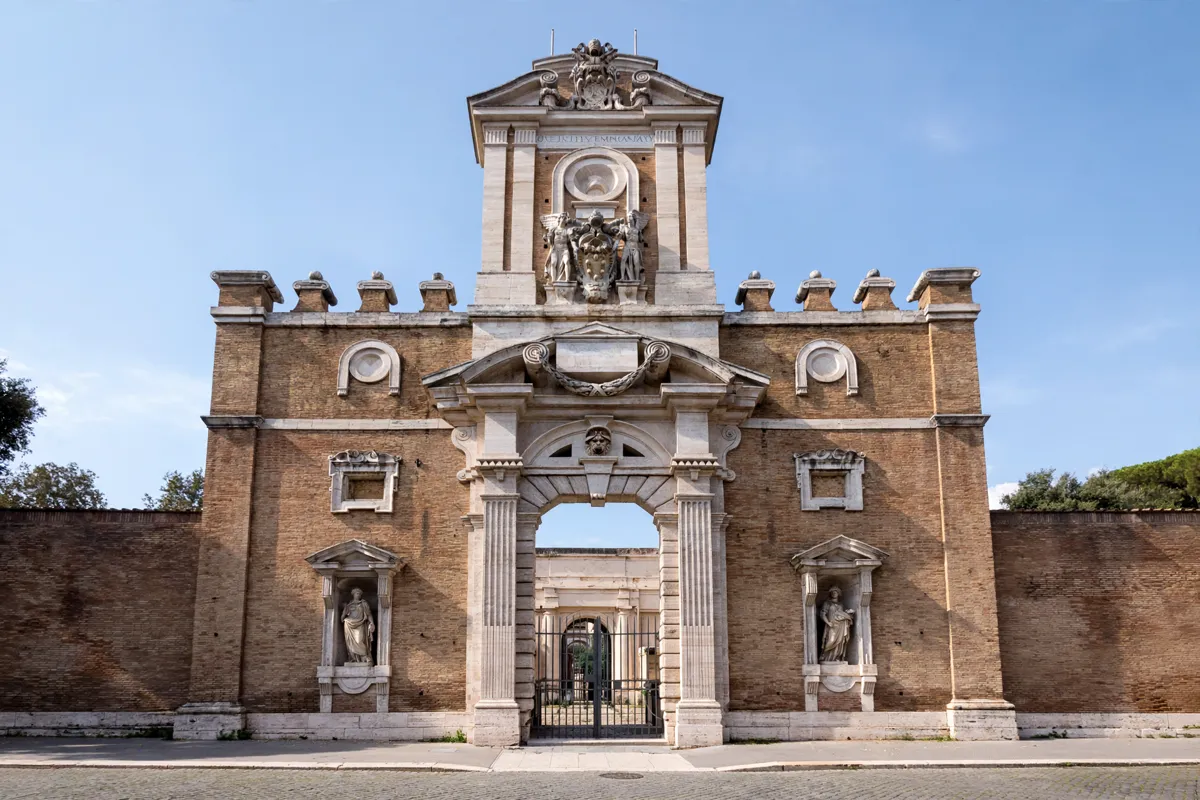
Look at both sides of the gate: the city-facing façade at the end of Via XX Settembre is Michelangelo’s side, while Vespignani designed the exterior elevation. The single arch, side niches and rebuilt façade show how the monument changed over time.
In the square in front, the Monument to the Bersagliere commemorates the military corps. Its bronze bugler figure is six metres tall. The historic gate buildings, once used as a customs office, house the Historical Museum of the Bersaglieri.
Rome’s official tourism page provides a location listing but no visiting hours or ticket information. Access to the gate interiors and museum is not established, so check the official site before you go if you plan to visit inside.
How do you get from Tiburtina to Porta Pia?
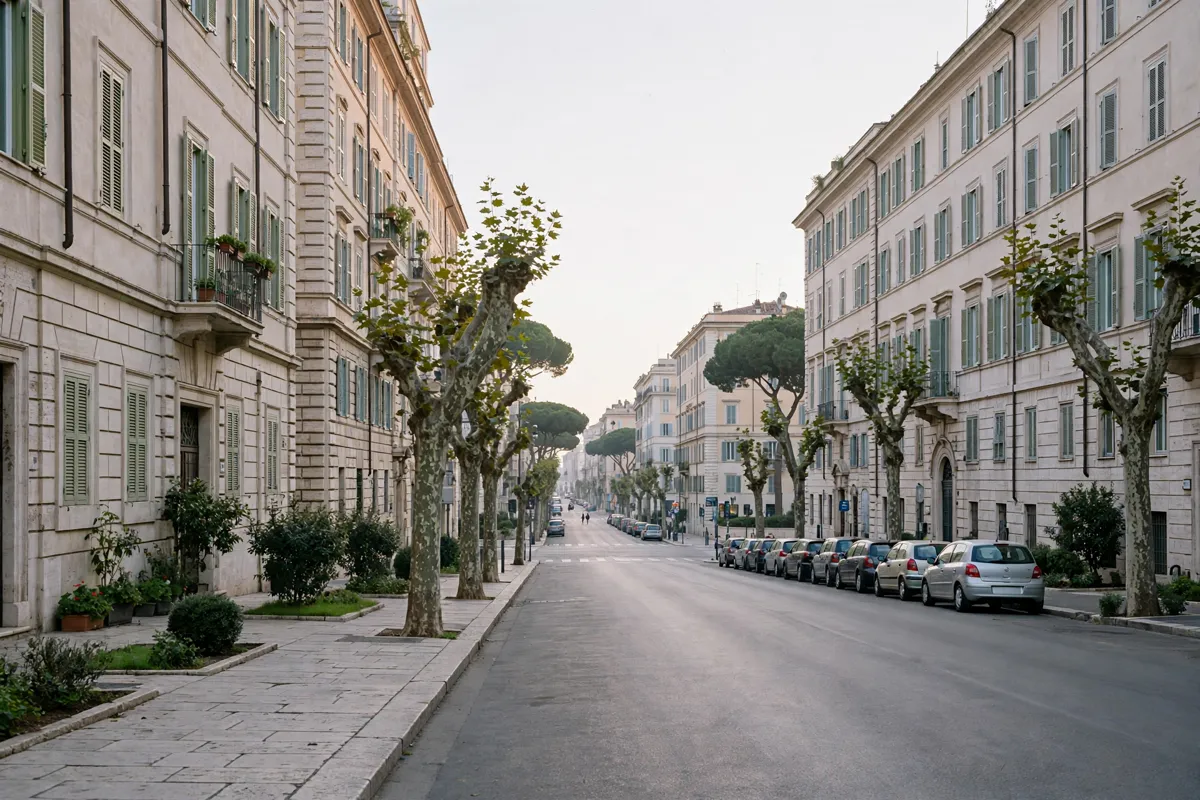
Porta Pia is about 2.7 km from Tiburtina Hotel Holiday. The official sources do not identify a current transit route or stop serving the gate, so avoid relying on an unverified public-transport itinerary.
Use the address, Via Messina, 25, to plan your route from the Tiburtina area. For a visit focused on the gate’s history, start with the two elevations, then look for the breach monument west of Porta Pia and the Bersagliere monument in the square.
If you are planning a broader itinerary, a one-day Rome route from Tiburtina to the historic center provides another way to shape time in the city.
Pairing the visit with other Rome sights
Villa Torlonia and La Casina delle Civette are other Rome sights to consider; a visitor guide to Villa Torlonia and La Casina delle Civette covers their visit together.
FAQs
Who designed Porta Pia?
Michelangelo designed the inner elevation. Virginio Vespignani later reconstructed Michelangelo’s façade and designed the exterior elevation.
Why is Porta Pia important in Rome’s history?
Troops entered Rome through a breach in the walls a few dozen metres from the gate on September 20, 1870, during the capture of Rome.
Can you visit the Historical Museum of the Bersaglieri?
The historic gate buildings house the museum, but current opening status, hours and fees are not established. Check the official site before planning an indoor visit.